
Checks
Land ownership search and title register
Run a land ownership search, read the title register and see what would stop a housing scheme, before you make an offer.
In short
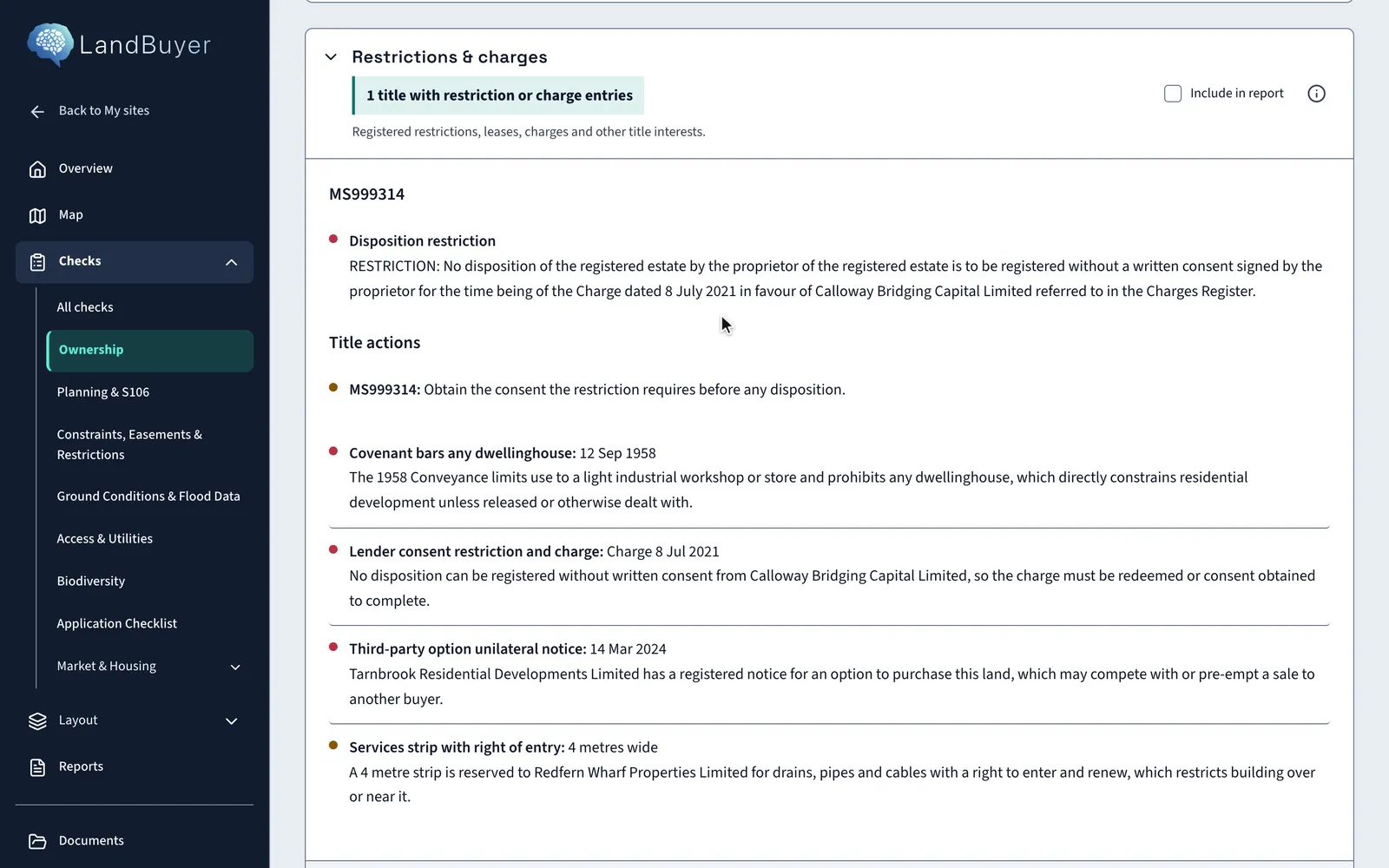
LandBuyer AI matches the title parcels that touch your red line, reads each title register, and lists the proprietor, easements, leases, restrictions and charges. An AI insight states what the title means for a housing scheme. On Kew Yard it finds, in minutes, a covenant that prohibits any dwellinghouse on the land.
What it covers
What our land ownership search covers
| Item | Source type | What you see |
|---|---|---|
| Title parcels on the red line | Title parcel boundaries | Every parcel that touches the site, with the share of the red line it covers |
| Registered proprietors | Title registers | Owner name, company or individual, tenure and the titles they hold |
| Restrictive covenants | Title registers and schedules | The covenant wording, and whether it restricts use, density or building |
| Notices, options and charges | Title registers | Options to purchase, unilateral notices and lenders' charges that a buyer must deal with |
| Easements and burdens | Title registers and filed deeds | Rights of drainage, services and access across the land, with the strip widths |
| Leases | Title registers | Leases noted against the title, so you know whether vacant possession is in doubt |
| Neighbouring freeholds | Title parcel boundaries | Adjoining parcels, for site assembly, ransom strips and access |
| Owner contact | Company and title records | A contact route for the owner, revealed with a credit |
Official guidance HM Land Registry property searchInformation held by HM Land Registry
On Kew Yard
A clean brownfield site with a covenant against housing
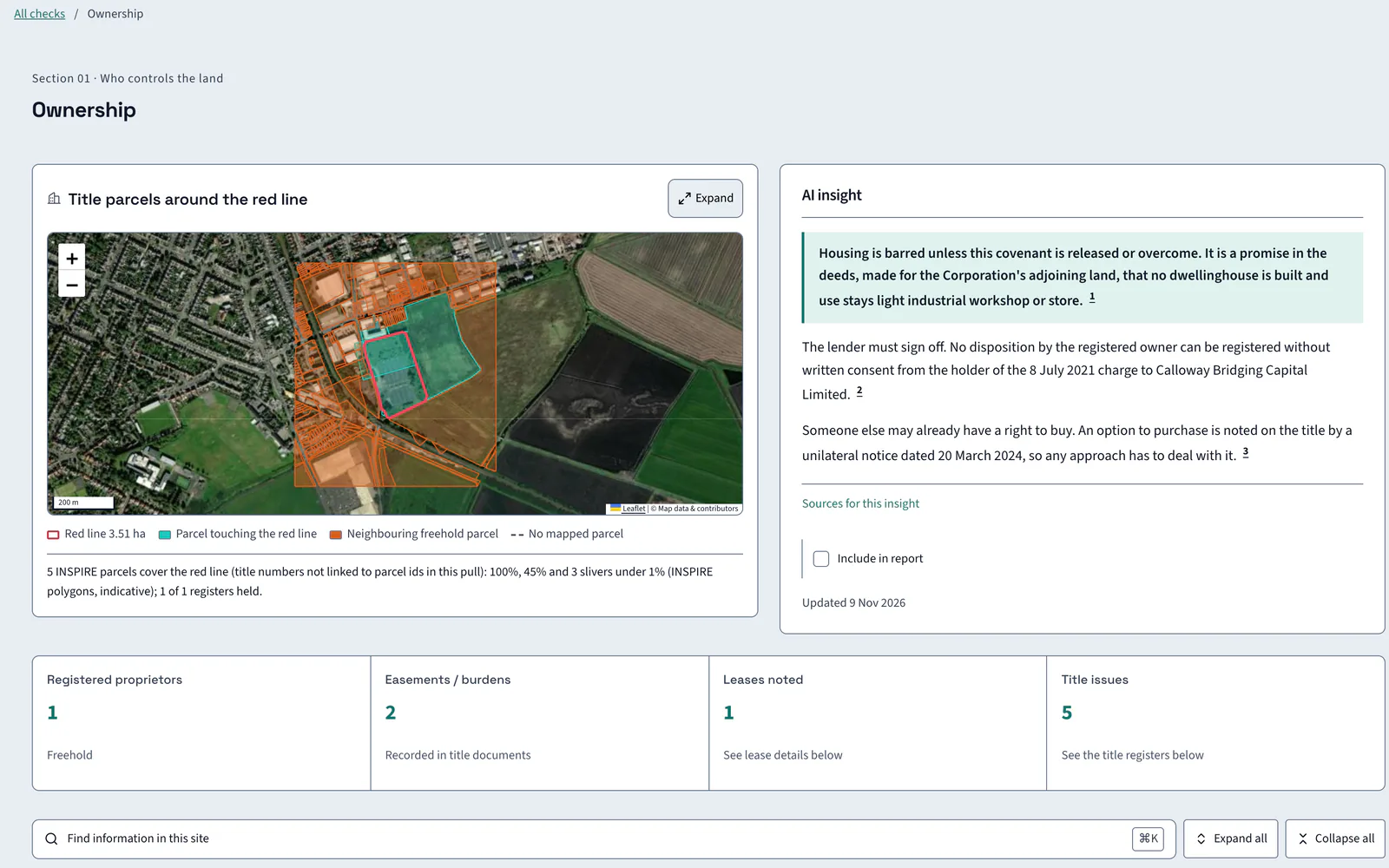
Kew Yard is a 3.51 ha brownfield freehold with one corporate owner and four title issues. One of them decides the deal.
AI insight
The recorded covenant limits use to a light industrial workshop or store and prohibits any dwellinghouse. A housing scheme would need it released or modified. An option to purchase granted in March 2024 is also protected by notice.
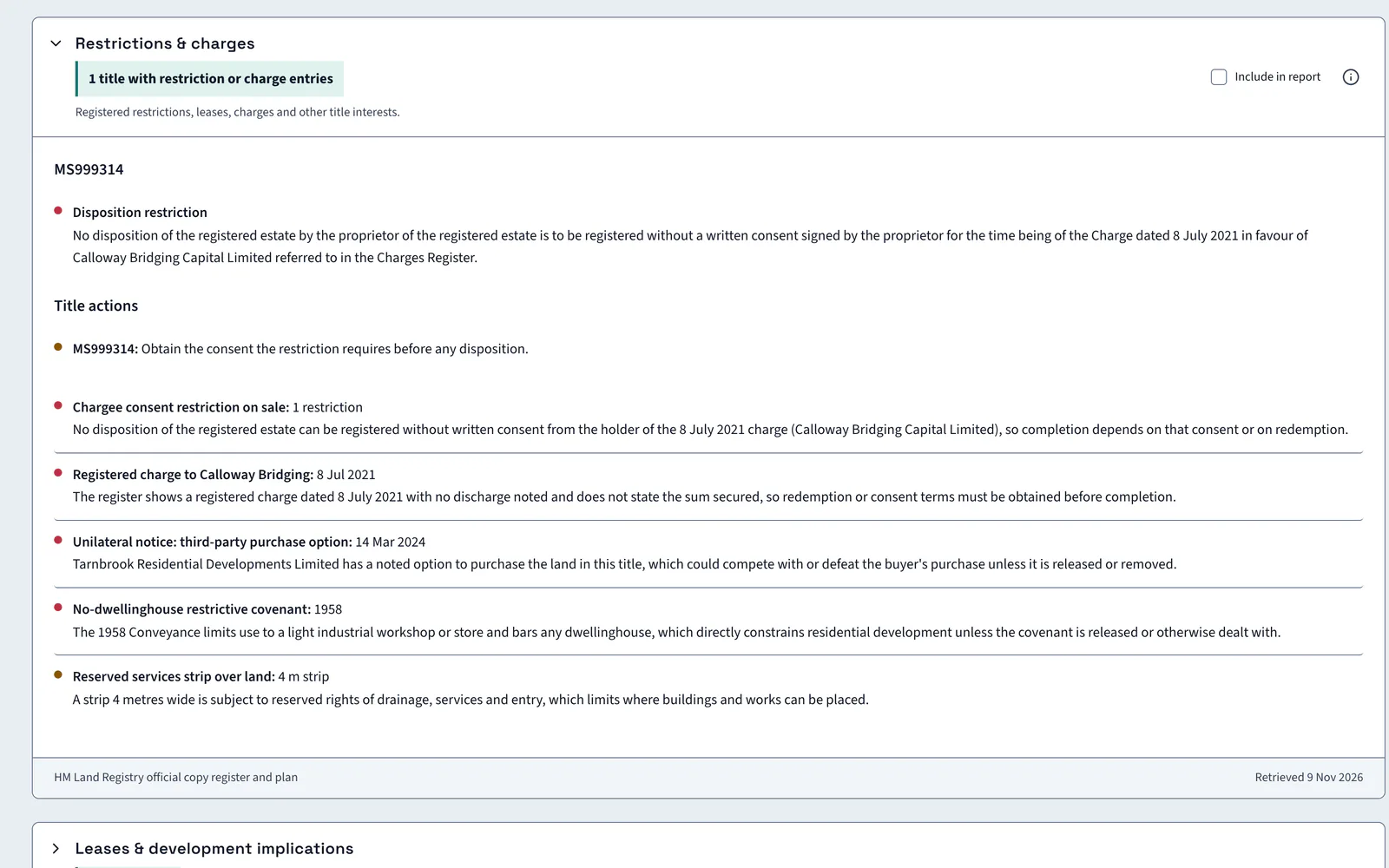
- Covenant against dwellings
- Lender consent
- Option notice
- 4 m services strip
In the report
Ownership goes into the report with its wording
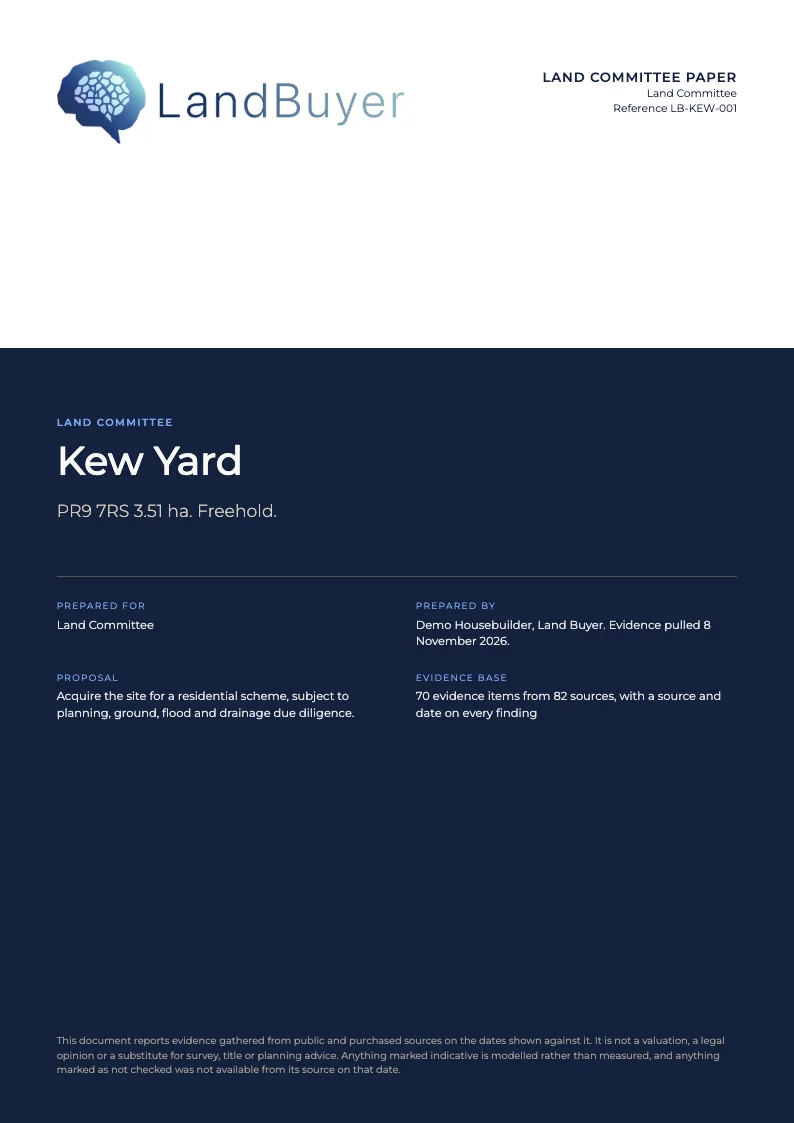
Tick Include in report on any title card. The proprietor, the covenant wording and the AI reading go into the land committee paper, with the source and date beside every finding.
FAQ
Land ownership and title register questions
Short answers to what land teams ask us before a demo.
How do I find out who owns land?
Draw or upload the red line. LandBuyer AI matches every title parcel that touches it and shows the registered proprietor and tenure of each title. Where you need to approach the owner, a contact route can be revealed with a credit.
Does it read the title register or only show parcels on a map?
It reads the register. Proprietors, restrictive covenants, easements, notices, charges and leases come from the register text, and the original wording is kept so your solicitor can check it.
What if a site sits across several titles?
Every title parcel touching the red line is listed with the share of the site it covers, and neighbouring freeholds are shown for assembly. On Kew Yard five parcels touch the red line and one register is held.
Is the Kew Yard title register real?
No. Kew Yard is our sample site and its title register is fictional specimen data, written to show how LandBuyer AI reads a real one.
How much does a title register cost?
HM Land Registry charges £7 to download a title register or title plan, and £11 for an official copy. A property summary is free. In LandBuyer AI, title documents use credits.
What if the land is unregistered?
HM Land Registry does not know who owns unregistered land, so a title search returns no owner. LandBuyer AI shows where no registered title covers the red line, so you know other enquiries are needed.
Keep exploring